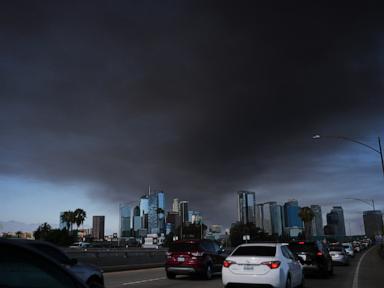
When a warehouse catches fire, it usually means a long night for local crews and a block or two of bad traffic. But when Los Angeles Mayor Karen Bass officially declared a local emergency on Saturday over a single burning building in Boyle Heights, it caught a lot of people off guard. Why would a warehouse fire require an emergency declaration usually reserved for earthquakes or massive floods?
It's not about the flames. It's about what's rotting inside. You might also find this related article useful: Why Helen Zille Might Actually Win Johannesburg.
The fire broke out on Wednesday at the Lineage Big Bear cold-storage facility, a massive 500,000-square-foot structure at 1400 S. Los Palos Street. Inside that giant commercial cooler sits 85 million pounds of frozen food. Because firefighters had to cut the power and drain the highly hazardous ammonia used in the building's refrigeration system, all that food is now thawing. LA isn't just dealing with a structure fire anymore. The city is facing a ticking biological and environmental clock.
The Anatomy of a Total Logistics Nightmare
You can't fight a cold-storage fire the way you fight a normal building fire. Los Angeles Fire Department Chief Jaime Moore explained that these facilities are built like giant thermoses. They have corrugated steel walls packed tight with dense foam insulation. Once that foam catches fire, it smolders endlessly inside the metal skin, protected from water sprayed from the outside. As extensively documented in recent coverage by Associated Press, the implications are worth noting.
Right now, water-dropping helicopters and massive aerial ladder pipes are drenching the building. They've managed to contain the flames to about half of the facility, but the real crisis is deep inside. Visibility is absolute zero. Firefighters can't walk in and start clearing out pallets because the structural integrity is compromised and the smoke is highly toxic.
To make matters worse, the roof features a massive solar panel infrastructure and lithium-ion batteries are stored on-site. This combination creates an incredibly volatile environment for first responders.
Why the Emergency Declaration Happened Now
Mayor Bass didn't issue this declaration lightly. By invoking the California Disaster Assistance Act, the city can bypass red tape and immediately secure state funding and specialized equipment.
The primary goal right now is prevention. Moving 85 million pounds of rapidly spoiling food requires an enormous logistics network. If left to rot, this mountain of organic matter becomes a severe biohazard. Runoff from the millions of gallons of water mixing with decaying food could easily overwhelm local storm drains and contaminate local waterways. The emergency declaration gives LA the administrative power to bring in heavy environmental remediation teams to dispose of the toxic materials safely before a full-blown environmental disaster hits the basin.
Breathing Through the Smolder in Boyle Heights
For the residents of Boyle Heights, this has been days of pure misery. A heavy, acrid plume of smoke has blanketed the neighborhood, prompting strict shelter-in-place orders earlier in the week. People are keeping windows shut and turning off their air conditioning units to avoid drawing the toxic air inside.
The smoke has spread so far that the smell is noticeable across most of the Los Angeles basin. Local officials are urging anyone with respiratory issues to stay indoors. To offer some relief, the city and county have set up dedicated clean-air centers:
- Pecan Recreation Center: Located at 145 S. Pecan St., operating as a 24-hour Smoke Relief Center.
- City Terrace Park: Located at 1126 N. Hazard Ave., operating as a Smoke Respite Center.
The timing couldn't be worse for the city. Los Angeles is currently hosting major international events, including World Cup matches this very weekend. Having a massive, toxic cloud of smoke hanging over a portion of the city is a major public health headache that the administration needs cleared immediately.
What Residents Need to Do Right Now
If you live in or around the Boyle Heights area, don't wait for the smoke to clear on its own. This fire has been burning since Wednesday, and officials haven't given a definitive timeline for when it will be fully extinguished.
Keep your doors and windows completely sealed. If you have an air purifier, run it on high. If you start experiencing shortness of breath, dizziness, or a persistent cough, do not try to tough it out. Head straight to one of the dedicated relief centers or seek medical attention. The city has mobilized these resources for public safety, so make use of them while the hazardous materials teams handle the mess.