War is brutal. It's messy. Right now, it's also a terrifying math problem.
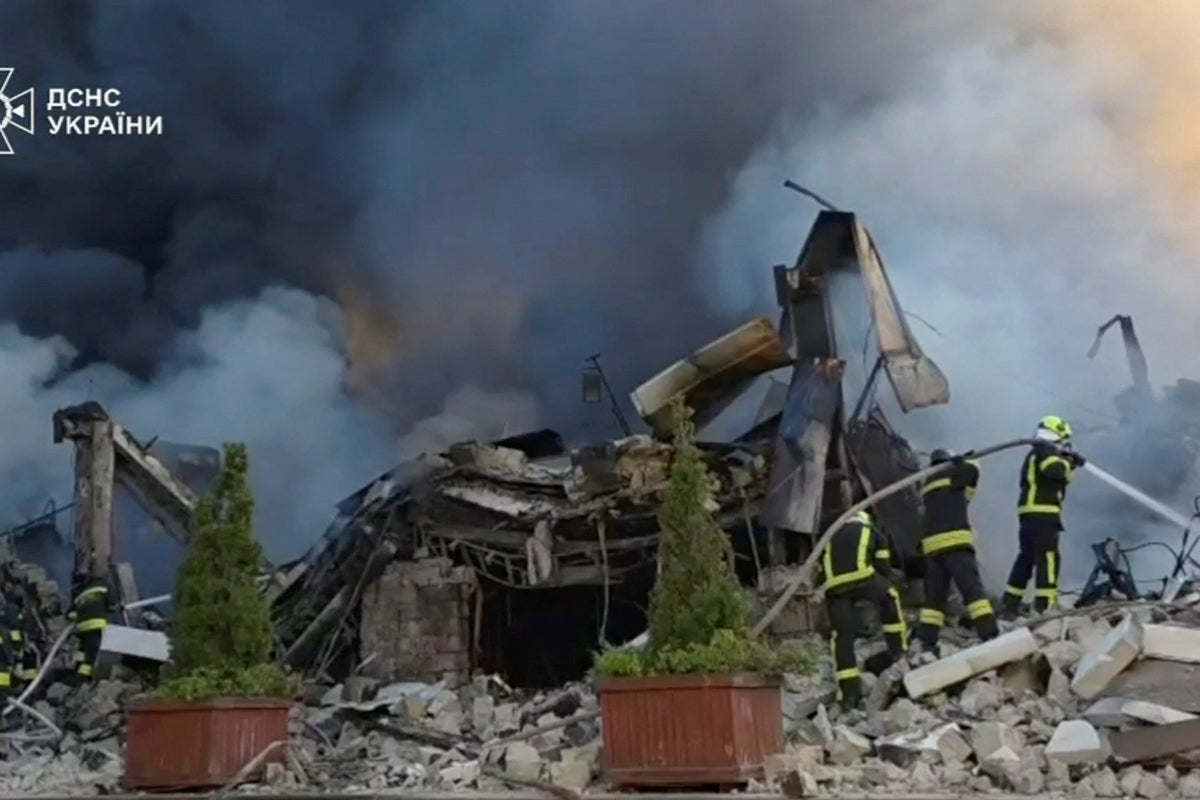
When you look at the map of Ukraine, it's easy to think the conflict has settled into a permanently frozen trench war. The ground forces drag through a brutal, slow-motion slugfest. Ground gains are measured in yards, not miles. Yet, hundreds of miles away from the trenches, the sky over Kyiv routinely lights up with fire.
Russia keeps launching concentrated waves of ballistic missiles, hypersonic weapons, and explosive drones at the Ukrainian capital. It seems counterintuitive. Why waste your most expensive, sophisticated weaponry on a civilian center far from the actual fighting when your frontline army is desperately struggling to move forward?
The answer isn't a random tantrum from the Kremlin. It's a calculated, cold-blooded military strategy designed to exploit Ukraine's single greatest vulnerability. Putin is targeting Kyiv because the capital remains the ultimate center of gravity, and Russia is trying to win the war through an aerial campaign of attrition.
The Frontline Illusion
Don't buy into the narrative that the war is completely static. The battlefield has transformed into a transparent kill zone. Reconnaissance drones watch every movement. Artillery and strike drones punish anyone who tries to mass tanks or infantry. It's pointillist warfare. Small units hold isolated strongpoints, and moving a large mechanized force across open fields has become nearly impossible.
This ground stagnation frustrates Moscow. The Russian military command spent months trying to restore operational maneuver to the field. They tried small-group infiltrations. They tried using dune buggies and motorcycles. They tried intermediate-range drones to cut off Ukrainian logistics. None of it triggered the rapid breakthrough the Kremlin wants.
Because the ground war is a grinding failure, Russia has decoupled its firepower from its maneuver forces. If the army can't advance, the air force and missile brigades will strike instead.
This isn't about capturing territory anymore. It's about breaking a nation's will to fight and emptying its pockets.
The Brutal Math of Air Defense Depletion
Kyiv is the most heavily defended city in Ukraine. It has to be. It holds the government, the command infrastructure, and millions of citizens. To protect them, Ukraine deployed its best Western-supplied defense systems, including Patriot batteries, NASAMS, and IRIS-T systems.
Russia knows this. They are using that concentration against Ukraine.
We see a massive shift in Russian strike tactics. In the earlier phases of the invasion, cruise missiles made up the vast majority of Russia's aerial attacks. Cruise missiles fly low and can change direction, but they are relatively slow. Ukrainian air defense got exceptionally good at shooting them down.
Now, the Kremlin is placing its bets on ballistic and hypersonic missiles. They routinely mix massive swarms of cheap, Iranian-designed Shahed drones with a handful of advanced Iskander-M and Zircon hypersonic missiles.
The drones have a cruel logic. They are slow and noisy, making them easy targets. But that's exactly the point. They are sent first to confuse radar networks, map out where the defensive batteries are hiding, and force Ukraine to fire off expensive interceptor missiles.
Once the air defense grid is distracted and depleted, the ballistic missiles hit. A Zircon or an Iskander travels at extreme speeds. They drop from high altitudes at steep angles. You only have a few minutes to react.
This is where the math becomes terrifying for Kyiv. A single Patriot interceptor missile can cost millions of dollars. A Shahed drone costs a fraction of that. Ukraine faces a constant, agonizing shortage of interceptor stocks. By forcing Kyiv to defend itself against weekly aerial pulses, Russia is draining Ukraine's air defense reservoirs faster than Western allies can replenish them.
If Kyiv runs out of interceptors, the sky opens up. Russian jets would fly freely over the country, bringing an end to the current stalemate and exposing frontline troops to unrestricted bombardment.
Holding the Center of Gravity
Every military analyst will tell you that you must protect your center of gravity. In Ukraine, that's Kyiv.
If the capital falls into chaos, the rest of the country fractures. The state cannot function without electricity, running water, and communication networks. By targeting the energy grid and civilian infrastructure in the capital, Russia aims to create an unlivable environment. They want to force a massive new wave of refugees into Europe, fracturing Western political unity.
There's also a psychological element. The British Defense Ministry noted that these relentless strikes aim to demoralize the population and force the leadership to capitulate. It hasn't worked. The Ukrainian people proved incredibly resilient. But the pressure is constant, exhausting, and deeply traumatic.
Imagine living under a permanent state of air-raid alerts. You wake up at 3:00 AM to the sound of explosions. The windows rattle. The ground shakes. You check your phone to see if a ballistic missile is heading toward your apartment block. Then you go to work the next morning. That's life in Kyiv. It's a psychological war of attrition.
Domestic Political Theater for the Kremlin
We also have to look at what's happening inside Russia. Putin answers to his own domestic audience, particularly the hardline military bloggers and ultra-nationalists who demand total victory.
When the Russian army fails to capture cities on the ground, Putin needs something to show his people. Big explosions on television look like victories. Dictatorships rely on the illusion of omnipotence. Launching a volley of hypersonic missiles at Kyiv allows the Kremlin to project power, satisfy the domestic war hawks, and pretend the war effort is going according to plan.
It also serves a diplomatic purpose. Every time Western leaders talk about peace negotiations, Russia steps up its strikes. It's a blatant message to Washington, London, and Brussels: We can keep doing this forever. Can you keep paying for it forever?
What Needs to Happen Next
Ukraine cannot solve this problem simply by shooting down missiles. Defensive warfare alone is a losing strategy when the enemy has more mass and fewer moral boundaries.
To stop the strikes on Kyiv, the strategy must change.
- Lift restrictions on deep strikes: Ukraine needs to destroy the launchers, airfields, and missile factories inside Russian territory. Shooting a missile down over Kyiv is useful, but destroying the bomber on the tarmac in Russia stops the threat before it starts.
- Dramatically scale up indigenous production: Relying solely on Western interceptors leaves Ukraine vulnerable to political shifts in foreign capitals. Kyiv is already expanding its own long-range drone and missile programs, like the land-attack Neptune and Peklo rocket drones. These programs need massive, immediate funding.
- Target Russian economic lifelines: Ukraine's recent campaign against Russian oil infrastructure proves they can hit back where it hurts. Disrupting Russian refining capacity chokes off the revenue Putin uses to build these multi-million-dollar missile salvos.
The grinding frontline war and the fiery skies over Kyiv are parts of the same strategic puzzle. Putin targets the capital because he knows he can't win a clean victory on the battlefield. He's betting that his capacity for cruelty will outlast the West's patience and Ukraine's supply of ammunition. Breaking that calculation requires more than just holding the line. It requires giving Ukraine the tools to strike the archer, not just the arrows.