Imagine standing in a line of 3,000 desperate families waiting for a stable council house, only to discover that the person who scored one is currently renting it out to tourists for £4,000 a week.
It sounds like a dark joke. It's not. For years, rogue tenants have treated heavily subsidised social housing as their personal Airbnb cash cows. Local councils knew it. The government knew it. Yet, the tech giants running these short-term rental platforms routinely hid behind privacy laws, refusing to hand over the data needed to catch the scammers. Read more on a related topic: this related article.
That massive blind spot just got hit with a heavy dose of reality.
Thanks to an industry-first partnership between the Cabinet Office, the Public Sector Fraud Authority, and Airbnb, the UK government is finally weaponizing platform data to flag illegal sublets. If you're using a taxpayer-funded social home to run a boutique holiday rental business, your time is officially up. Further journalism by The New York Times explores similar views on this issue.
Why Social Housing Fraud Still Matters
This isn't about someone renting out a spare bedroom while they visit family for a weekend. This is systemic fraud. The Tenancy Fraud Forum estimates that every single fraudulently sublet social home costs taxpayers an average of £42,000 over three years. Multiply that across thousands of properties nationwide, and the financial bleeding is staggering.
But the real cost isn't financial. It's human.
When an opportunistic tenant sublets a council property, they strip a vulnerable family of secure housing. In boroughs like the Royal Borough of Kensington and Chelsea or Islington, housing registers are completely jammed. Local enforcement teams used to spend months—sometimes years—knocking on doors, interviewing confused Australian or American tourists, and shelling out up to £20,000 in court fees just to force tech platforms to cooperate.
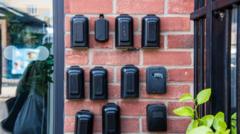
The old process was entirely reactive. Investigators relied on disgruntled neighbours reporting excessive trash or suspicious key safes clamped to communal railings. By the time a local authority gathered enough evidence to act, the rogue tenant had pocketed tens of thousands of pounds in pure profit.
The True Cost of a Sublet Scam
- Taxpayer Burden: Roughly £42,000 per fraudulent home over three years.
- The Waitlist Impact: Thousands of families stuck in temporary accommodation.
- Enforcement Costs: Thousands spent on legal bills just to get a tech platform to talk.
The Secret Weapon Data-Sharing Deal
The Cabinet Office partnership changes the entire playbook. Instead of councils begging for info on a case-by-case basis, data-matching systems will actively cross-reference holiday listings against active social housing registers.
When a match pops up, the system flags it. Enforcement officers won't need a court order just to figure out who is operating the account. They will have the raw data to match names, addresses, and bank accounts.
It is about time. For a long time, platforms used the Data Protection Act as a shield. They claimed privacy regulations prevented them from sharing host details with social landlords. Investigators argued that data protection laws explicitly allow data sharing for law enforcement and fraud prevention. The tech companies simply chose to prioritize their bottom line over public interest until the pressure became unbearable.
The Exploits Beyond the Sublets
Renting out social housing isn't the only way rogue operators game the system. In major hubs like London, short-term lets are legally capped at 90 nights a year unless the host has specific planning permission.
Recent investigations showed that clever operators routinely clone their listings. They use photo-matching software to create multiple identical ads for a single property, switching between them the moment an ad approaches the 90-night limit. This duplicate listing strategy makes it incredibly difficult for local planning enforcement teams to track compliance.
The new data-sharing system aims to crush these loopholes too. By integrating automated data pipelines directly with the government's upcoming short-term let registration scheme, hiding behind duplicate profiles will become virtually impossible.
What Happens Next for Rogue Hosts
If you are a tenant illegally subletting a social home, the walls are closing in. What actually happens when you get caught?
First, the data flag triggers an immediate fraud investigation by the local council or housing association. Under the Prevention of Social Housing Fraud Act, illegal subletting is a criminal offence. You won't just face an uncomfortable conversation with your landlord. You risk losing your tenancy immediately, facing hefty prosecution fines, and acquiring a criminal record that will ruin your chances of ever securing social housing again.
If you suspect a property in your building is being used as an illegal holiday rental, don't wait for the automated system to find it. Note the frequent rotation of guests, keep an eye out for newly installed external key boxes, and report the address directly to your local council's tenancy fraud hotline.
The government is finally taking housing fraud seriously. The data pipelines are live, the matching tools are running, and the easy money from illegal sublets is gone.
Airbnb and its impact on the UK housing market
This video analyzes how short-term rental platforms affect housing availability and regulatory challenges across the UK.


