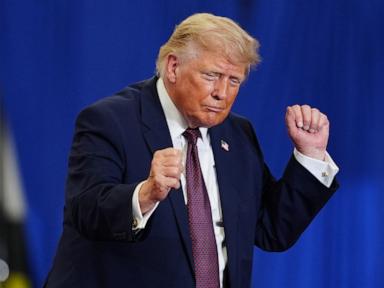
Donald Trump just pulled off one of the most predictable pivots of his second term. Facing a collapsing musical lineup for the kickoff of the nation's 250th anniversary celebrations, the president stepped directly into the void. He turned what was supposed to be a unity-focused opening concert on the National Mall into a full-blown, stadium-style MAGA rally.
If you're trying to figure out why a historic milestone like the semiquincentennial is suddenly featuring stealth bomber flyovers, Lee Greenwood, and campaign rhetoric, it isn't a mistake. It is a deliberate strategy. Trump faces brutal polling numbers and economic headwinds heading into the 2026 midterms, and he's using the National Mall as his personal stage to reshape the narrative. In related developments, take a look at: What Everyone Gets Wrong About Usha Vance And The Politics Of Faith.
How a Concert Crisis Became a Campaign Stage
The event on the National Mall wasn't originally billed as a political rally. Organizers had scheduled a massive "Freedom 250" concert to jumpstart "The Great American State Fair," a 16-day exhibition stretching from the U.S. Capitol to the Lincoln Memorial.
Then the lineup collapsed. Wikipedia has analyzed this important topic in extensive detail.
Musicians like Martina McBride, the Commodores, and Young MC pulled out of the event. The artists cited concerns that the celebration had become heavily politicized by the administration. With the schedule gutted and only a couple of acts left willing to play, Trump didn't cancel the night. He amplified it. He took to social media to call himself the "Number One Attraction anywhere in the World" and promised the biggest rally in history.
Instead of a bipartisan musical festival, attendees got a highly managed spectacle. Country singer Alexis Wilkins took the stage, alongside staples like Lee Greenwood. Trump replaced the missing pop stars with his own voice, transforming a civic milestone into a political rally designed to rally his core base ahead of November.
The Brutal Numbers Driving the Spectacle
To understand why Trump chose to hijack his own administration's celebration, you have to look at the economic reality Americans are dealing with right now. This rally isn't happening in a vacuum. It is a calculated distraction from tough political headwinds.
According to recent AP-NORC polling, Trump's overall approval rating sits at a weak 37%. The numbers behind that data show exactly where the anxiety lies:
- Economic Leadership: 33% approval
- Foreign Policy (Iran): 34% approval
- Immigration: 40% approval
Inflation remains stubborn, consistently outpacing wage growth. The national budget deficit is climbing, keeping interest rates painfully high for everyday buyers. Even tech-driven growth in artificial intelligence has triggered intense anxiety about middle-class job losses, making the construction of data centers a massive political battleground across the country.
By staging a massive party on the National Mall, Trump is trying to force the media and the public to look at stealth bombers and flags rather than grocery bills and interest rates.
Distracting from Foreign Policy and Local Disasters
The timing of this rally serves another critical purpose: selling a narrative of victory on foreign affairs. The administration is working overtime to convince voters that the deeply unpopular conflict with Iran is over. With an interim deal signed with Tehran, the Strait of Hormuz is starting to reopen, causing oil prices to ease. Trump used the Mall to take a victory lap on this deal, trying to clear the deck before the midterms.
But critics aren't letting him off that easily. On the local front, Democrats have seized on visible failures right in Washington. The botched repairs to the Lincoln Memorial reflecting pool—which led to a massive, unsightly algae outbreak—have become a localized symbol for opposition lawmakers.
Representative Jared Huffman, a California Democrat, pointed out during recent congressional hearings that the Trump-aligned group managing the 250th anniversary has been selling access to special interests. Huffman argued that the president is redrafting the nation's founding story to fit his personal brand, completely abandoning the traditional nonpartisan nature of civic anniversaries.
Does This Strategy Actually Work for Midterms?
It's tempting to think a massive rally in the nation's capital will instantly shift the political map for the 2026 midterms. The actual data says otherwise.
James Snyder, a political science professor at Harvard University, has studied the data behind Trump's rallies for years. His research shows that while these events are incredibly effective at turning out core supporters in the immediate, short-term aftermath, the timing here minimizes that benefit. Because this National Mall kickoff is happening more than four months before the November elections, the immediate polling bump will likely fade long before voters hit the ballot box.
Presidents have always used historical milestones to tie themselves to founding ideals. But there's a distinct shift in how this administration is handling the anniversary. Traditional celebrations try to project an aura of national unity. Trump's approach treats the country's 250th birthday as a validation of his specific political movement, incorporating elements like "Make America Healthy Again" pavilions managed by Health Secretary Robert F. Kennedy Jr. into the broader state fair grounds.
What to Watch Next
The political theater on the National Mall isn't a one-time occurrence. This is the blueprint for the rest of the summer. The administration has already locked in plans for another massive rally on July 4th, promising record-breaking fireworks and massive military demonstrations.
If you want to track whether this strategy is actually moving the needle for the administration, keep your eyes on two specific indicators rather than crowd sizes:
- Look for shifts in suburban generic congressional ballots over the next six weeks to see if the patriotic messaging softens Trump's negatives.
- Watch the crude oil futures market to see if the easing situation in the Strait of Hormuz provides genuine relief at the pump, which will impact voters far more than any speech delivered on the Mall.