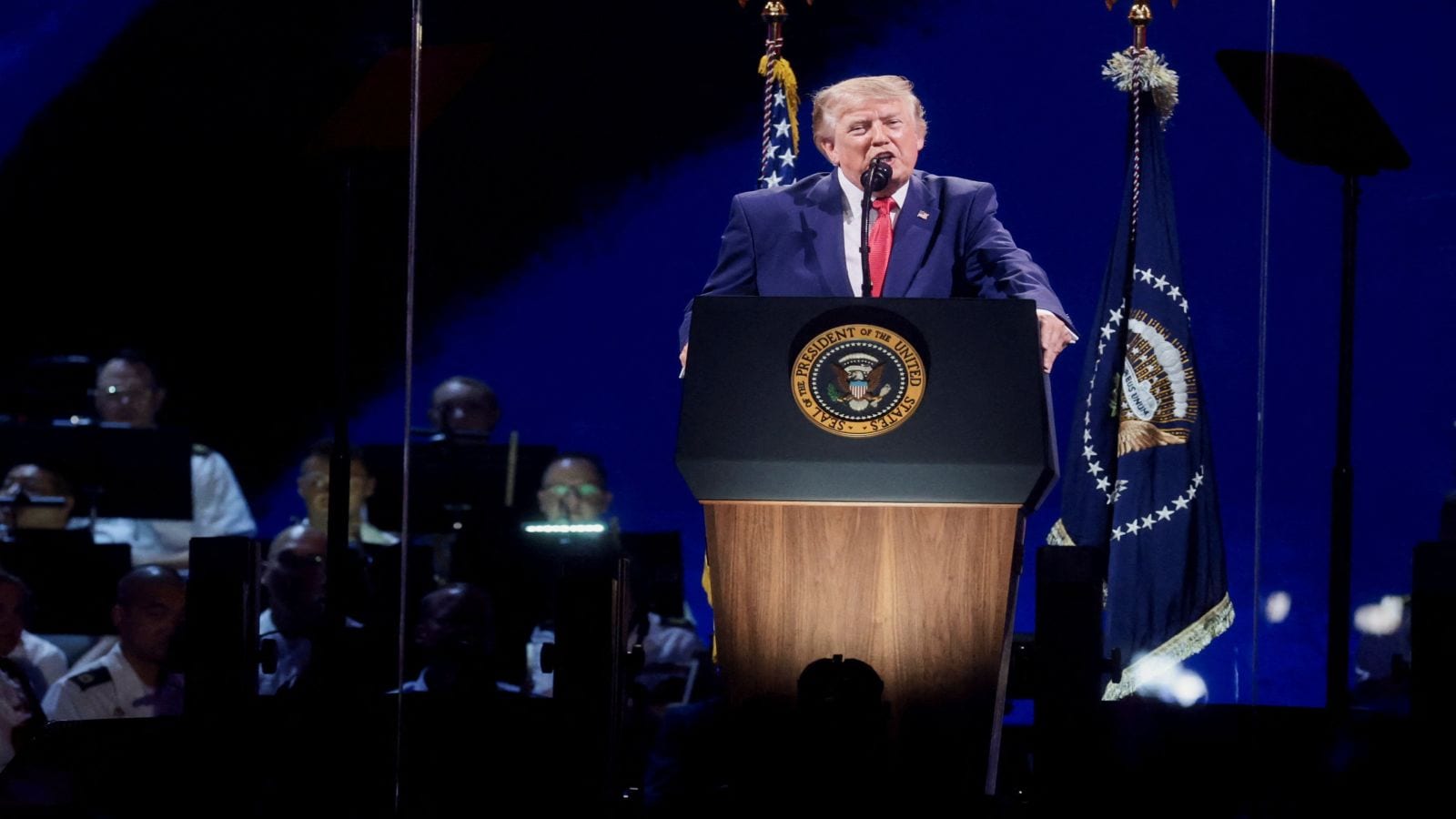
Donald Trump just dropped a massive diplomatic bomb at the 2026 NATO summit in Ankara, reminding everyone that his obsession with Greenland is not a passing joke. During a side meeting with Turkish President Recep Tayyip Erdogan, Trump explicitly declared that Greenland should be controlled by the US, not Denmark. He did not mince words. He tied the Arctic island directly to American survival and even threatened to pull US troops out of Europe if NATO allies keep blocking the move.
If you think this is just standard political theater, you are misreading the situation. The White House is treating this as a core national security objective. The administration sees Greenland as an undefended flank that is increasingly surrounded by Russian and Chinese vessels. While Danish Prime Minister Mette Frederiksen quickly fired back from Ankara, stating that Greenland is simply not for sale, the ongoing standoff is pushing the Western alliance into completely uncharted territory.
The real question is why a massive, ice-covered island has become the focal point of American foreign policy. The answer lies in a mix of military positioning, raw resources, and a dramatic shift in how the Arctic is being contested.
The Ankara Bombshell and Why It Shattered NATO Diplomacy
When leaders gathered in Turkey for the July 2026 summit, most expected the focus to remain strictly on Eastern Europe and defense spending targets. Trump had other plans. Speaking to reporters on Tuesday, he blamed the Greenland dispute for damaging his relationship with NATO. He argued that Denmark does not invest enough to protect or develop the territory, leaving a massive security vacuum in the North Atlantic.
Trump claimed that the island is heavily surrounded by Chinese ships and Russian ships, adding flatly that the situation is not going to continue under his watch. His threat to remove all American soldiers from Europe shows exactly how high the stakes have become. It is a brutal negotiation tactic that has left European diplomats scrambling.
Hours after Trump spoke, Mette Frederiksen made her position clear. She stated that Denmark expects its allies to respect Danish sovereignty and territorial integrity. Greenlandic officials have also rejected any talk of a sovereignty transfer. But behind the scenes, the pressure is mounting. US Secretary of State Marco Rubio confirmed that Washington has been holding monthly discussions with both Copenhagen and Nuuk. The Americans are not backing down, and they are using every bit of economic and military weight they have to force a resolution.
The Real Reason the White House Wants Greenland
To understand why the US is pushing so hard, you have to look at the map and look at the changing climate. The Arctic is melting, and as the ice recedes, it exposes massive opportunities and vulnerabilities.
Minerals, Ice, and Moving Shipping Lanes
Greenland holds some of the largest untapped deposits of critical minerals on earth, including rare earth elements that are vital for modern electronics, defense systems, and battery production. Right now, China controls the vast majority of the global supply chain for these minerals. Securing Greenland would give the US an independent, massive supply of these resources right in its own backyard.
The melting ice is also opening new, shorter shipping routes across the top of the world. These lanes could bypass traditional maritime choke points. The US government fears that if Washington does not control this territory, Beijing or Moscow will establish a permanent commercial and military presence there. A senior US official recently admitted that acquiring the island is currently viewed by the administration as the only definitive way to address these long-term security risks.
The Ghost of the Cold War at Pituffik Space Base
The US military has a long history on the island. The military already operates the Pituffik Space Base, which was known as Thule Air Base until recently. Located in the northwest corner of Greenland, this base houses a vital early warning radar system designed to detect incoming ballistic missiles over the North Pole.
During the Cold War, thousands of American troops were stationed here. Over the decades, that presence dwindled to about 150 personnel. Trump looks at that drawdown as a historic mistake. He openly stated at the Davos conference earlier this year that the US should have kept Greenland after World War II when American influence was at its absolute peak.
How Denmark and Greenland Are Pushing Back
The resistance to Washington's ambitions is fierce and deeply personal for the people living there. In May 2026, hundreds of protestors gathered outside the newly expanded US consulate in Nuuk. They carried signs reading "Greenland belongs to the Greenlanders" and chanted "no means no." Public opinion polls across the island show that the population is overwhelmingly opposed to becoming an American territory or state.
Denmark has responded by reinforcing its own presence. Copenhagen announced a 14.6 billion kroner plan to boost Arctic defense capabilities. Hundreds of elite Danish combat soldiers trained in arctic warfare have been deployed to the island, and the Danish military led a major NATO exercise involving special forces from Norway, Sweden, France, and Germany.
The legal reality complicates things further. Under a 1951 treaty, the US has extensive military rights in Greenland, but that treaty does not grant territorial sovereignty. Greenland is a self-governing, autonomous territory within the Kingdom of Denmark. Neither Copenhagen nor Nuuk has any intention of rewriting that agreement to allow an American annexation.
What Happens Next for Arctic Security
This dispute will not blow over with a few polite diplomatic statements. The Trump administration has already demonstrated it will use economic coercion to get its way. Back in January 2026, Trump threatened a 25% import tax on goods from several European nations unless Denmark agreed to negotiate. While he temporarily paused those tariff threats during the Davos conference, his latest comments in Ankara show that those economic weapons are still very much on the table.
For anyone tracking international relations, the next steps are clear. Watch the monthly diplomatic meetings led by Marco Rubio. Watch whether the US decides to unilaterally expand its military footprint at Pituffik Space Base under the guise of urgent missile defense upgrades.
If you are doing business in Europe or tracking global markets, prepare for ongoing turbulence in US-European trade relations. The Greenland issue is no longer a bizarre side note in foreign policy. It has become a central piece of the geopolitical puzzle, and the White House is ready to break old alliances to secure it. Keep your eyes on Arctic defense deployments and NATO spending debates over the coming months, because the battle for the top of the world is just getting started.