The ground in north-central Venezuela didn’t just shake on June 24, 2026. It shattered. Two massive seismic shifts struck within 39 seconds of each other—a 7.2 magnitude shock immediately followed by a brutal 7.5 mainshock.
The government has just updated the official grim tally to 3,535 dead. Let’s be completely honest here. That number is just the tip of a very deep, tragic iceberg.
If you're tracking this disaster to understand the true scale of what's happening on the ground, relying solely on official state press releases won't cut it. Communication blackouts, structural shortcuts, and an already fragile healthcare system mean the real crisis is much worse than the daily updates suggest. Here’s what’s actually happening beneath the state-approved narrative.
The Illusion of the Official Tally
The Venezuelan Ministry of Communications and Health Minister Carlos Alvarado recently updated the data, confirming over 3,500 fatalities and more than 16,700 injuries. They’re framing this as the definitive count of the tragedy.
It isn't.
Alvarado himself clarified that these numbers only reflect casualties officially recorded and processed at functioning hospitals. Look at the reality of the situation on the ground.
- The Missing Factor: Independent databases indicate that in La Guaira alone, more than 11,200 people are officially listed as missing.
- Logistical Collapse: Local forensic and morgue services completely broke down within forty-eight hours of the disaster.
- The Time Gap: Experts from international watchdogs point out that when infrastructure completely flattens, finalizing a true death toll takes months, if not a year.
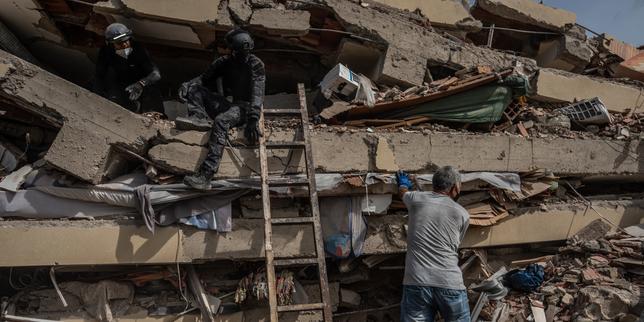
Most search and rescue workers on the ground admit that the vast majority of those missing under the heavy concrete slabs are likely dead. The U.S. Geological Survey (USGS) PAGER system estimated early on that fatalities could easily exceed 10,000 based on population density and building vulnerability. The official toll is lagging behind reality by thousands of lives.
Why a National Holiday Made Things Worse
You’d think a holiday means fewer people in vulnerable high-rises, right? Wrong.
June 24 is a major national holiday in Venezuela, celebrating the Battle of Carabobo. Because offices and schools were closed, families weren't scattered across lower-density commercial zones. They were crowded together inside residential blocks, apartment complexes, and coastal homes when the clock hit 18:00 local time.
When the double shock hit the San Felipe–Yumare–Montalbán axis, residential structures in Caracas and La Guaira bore the full brunt of the impact. At least four major residential high-rises in the affluent Los Palos Grandes and Altamira neighborhoods of Caracas collapsed completely. People didn't have time to run down fifteen flights of stairs.
In Catia La Mar, the local children’s hospital collapsed, claiming the lives of 16 children inside. The timing meant emergency response teams were understaffed for the first twelve hours as off-duty personnel struggled to navigate broken roads and severed phone networks to reach their stations.
The Scandal of Styrofoam and Paper Walls
Earthquakes are natural events, but high death tolls are almost always man-made. This disaster exposed a massive structural issue that local engineers have whispered about for years.
As international search and rescue teams (including specialized units from Costa Rica and the United States) started cutting through the rubble of collapsed buildings in La Guaira and central Caracas, they found something shocking.
"We are finding that several apartment complexes that completely pancaked were built using styrofoam blocks sandwiched between thin layers of concrete for internal and structural walls."
This cutting of corners saved millions for corrupt contractors during construction booms but turned residential blocks into absolute death traps. Nearly 800 buildings collapsed across seven states, with 189 completely leveled to foundations. When a shallow earthquake occurs between 10 and 22 kilometers deep, seismic waves don't have time to lose energy before hitting the surface. If your walls are made of cheap filler instead of reinforced rebar, the building drops instantly.
A Healthcare System Operating in the Blind
If you need urgent medical care in La Guaira or Caracas right now, you’re facing a lottery. The Pan American Health Organization (PAHO) and the World Health Organization (WHO) deployed rapid engineering and medical teams to assess the top priority hospitals. The findings are chaotic.
Hospitals like Vargas-IVSS and Rafael Medina Jiménez are currently functioning under massive structural restrictions. Real-time visibility on available beds doesn't exist. If an ambulance or an aid truck picks up a severely injured survivor, they’re guessing which facility has an open surgical slot or working electricity.
Overcrowding has caused a massive backlog in neurosurgery and orthopedic trauma cases. On top of that, at least two dedicated mental health facilities in La Guaira were ruined by the tremor, leaving a surging population of traumatized survivors with zero access to acute psychiatric care or crisis medication.
Real Actions for the Ground Crisis
Forget the bureaucratic debates. If you want to understand what actually helps right now or if you are coordinating remote relief logistics, focus on these three immediate issues.
Secure the Water and Vaccine Lines
With water mains shattered across Carabobo and Yaracuy, survivors are drinking from unsafe sources. Severe shortages of basic antibiotics and vaccines are a massive threat. PAHO has helped broker emergency vaccine donations from Brazil and Chile, but distribution is bottlenecked by fuel shortages.
Monitor the Aftershocks
With over 995 aftershocks recorded since June 24, half-broken buildings are still falling. Just days ago, an already weakened school building in La Pastora Parish partially gave way. If you’re clearing rubble, structural monitoring has to happen every hour, not once a day.
Bypass Central Logistics Centers
International agencies like Médecins Sans Frontières (MSF) are deploying mobile clinics directly to communities in La Guaira because moving supplies through major hubs like Simón Bolívar International Airport is a nightmare. The airport infrastructure is heavily cracked, and commercial flights are totally grounded.
The emergency isn’t over just because the initial shaking stopped. Over 18,000 people are sleeping on cardboard in public parks and transitional camps without a single long-term housing prospect. Keep your eyes on the independent field reports, because the official state numbers aren't telling you half the story.