On June 24, 2026, northern Venezuela experienced its most violent geological nightmare in more than a century. A massive doublet earthquake sequence—a magnitude 7.2 shock closely followed by a crushing 7.5 mainshock just 39 seconds later—tore through Yaracuy state and devastated regions near Caracas. Buildings turned to dust. Over 920 people are dead. The UN estimates that up to 50,000 people are still missing under the rubble.
But while the international community slowly untangles its bureaucratic red tape, a massive, organic relief machine has already kicked into overdrive. It is happening right across the border.
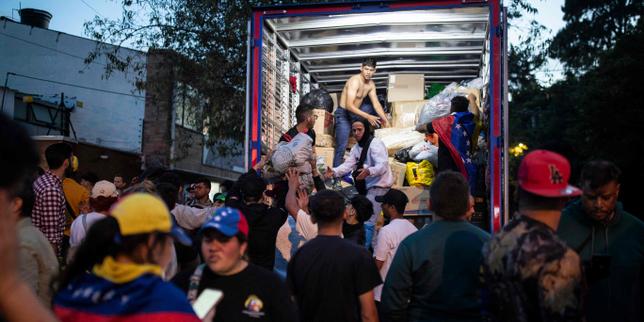
Colombia is home to roughly 3 million Venezuelan migrants and refugees who fled years of economic collapse. Now, those same people are leading the charge to save their homeland. Walk through the streets of Bogota, Medellin, or Cucuta right now, and you won’t see despair. You’ll see action.
Diaspora communities aren't waiting for permission. They are organizing supply drives, building informal logistics networks, and turning small apartments into makeshift distribution centers. It's a gritty, beautiful display of human solidarity that tells us everything we need to know about how modern crisis response actually works.
The Sudden Shock of the June 24 Doublet Earthquake
The science behind this disaster is terrifying. Seismologists at organizations like Miyamoto International and the United States Geological Survey noted that the shallow depth of just 10 kilometers concentrated massive destructive energy right at the surface. Strike-slip faults along the Caribbean and South American plate boundaries released horizontal energy that ripped apart buildings in Caracas neighborhoods like Los Palos Grandes and Altamira.
It was the strongest quake sequence to hit the nation in 125 years. The destruction shut down Simon Bolivar International Airport, crippling official air transport when it was needed most.
For the millions of Venezuelans living abroad, the initial shock hit through smartphone screens. WhatsApp groups exploded with frantic messages. Videos of collapsed apartment blocks in La Guaira and terrified children screaming in the dark went viral instantly.
When you're a migrant, watching your home country break from a distance creates a special kind of agony. You feel helpless. You feel guilty for being safe. But instead of letting that grief paralyze them, the Venezuelan diaspora in Colombia turned their trauma into a literal lifeline.
Why Bogota Became a War Room for Venezuelan Relief
Mainstream media outlets love to paint refugee populations as vulnerable groups who only receive aid. This crisis flips that lazy narrative entirely. The diaspora is the primary responder.
In Bogota, grassroots associations and regular families are leading the logistical charge. They know the geography. They know which local leaders on the ground can be trusted to distribute food, and they know how to navigate the complicated realities of a deeply fractured Venezuelan infrastructure.
World Vision UK reports that over 90% of households in Venezuela already faced severe shortages in basic services before the ground even shook. The double earthquake didn't just break buildings; it shattered an already fragile power grid and contaminated water systems.
Venezuelan volunteers in Colombia understand this harsh reality intimately. They aren't sending useless items. They are packing heavy-duty water purification tablets, solar-powered flashlights, baby formula, and high-calorie non-perishable foods. They understand that under the current political realities and the recent history of international tensions, official aid can get bottlenecked at checkpoints. Informal, decentralized networks move much faster.
Moving Money and Medicine Through Broken Borders
Getting physical aid across the Colombian-Venezuelan border has never been simple. It is a logistical minefield. Bureaucracy, shifting border policies, and damaged roads mean that traditional shipping methods are often dead on arrival.
What actually works is hyper-local coordination. Small-scale diaspora groups are partnering with local bus drivers, cross-border traders, and trusted church networks to ferry supplies across the border in manageable batches. They bypass the large hubs and deliver directly to municipal parishes in Yaracuy, Trujillo, and Carabobo.
Digital money transfers are another vital tool. Since standard banking options inside Venezuela are notoriously unreliable, migrants are using informal peer-to-peer digital networks to send cash directly to families and local rescue teams. This allows survivors to buy whatever scarce supplies are left in local markets immediately, boosting the local economy when it needs it most.
It's a decentralized strategy born out of sheer necessity. It works because it relies on deep personal trust rather than institutional stamps of approval.
The Hidden Practical Steps You Can Take Right Now
If you want to help the survivors of this historic disaster, don't just dump random clothes into a donation bin. Vague charity does nothing but clog up supply lines. You need to be strategic.
First, identify and support grassroots, diaspora-led initiatives rather than massive, slow-moving global funds. Groups based directly in Colombia or operating on the border have immediate access to the hardest-hit zones. Look for verified organizations that explicitly state how they bypass logistical bottlenecks.
Second, prioritize funding for clean water solutions and medical supplies. With hospitals in La Guaira and Caracas structurally compromised, antibiotics, bandages, and water purification gear are worth their weight in gold.
Finally, keep the focus on the long-term reality. The USGS PAGER system issued a red alert for this event, warning that economic losses could approach a massive chunk of Venezuela’s entire GDP. The news cameras will eventually leave Caracas, but the reconstruction will take years. The diaspora will still be working long after the headlines fade. Support them now, and stick with them for the long haul.