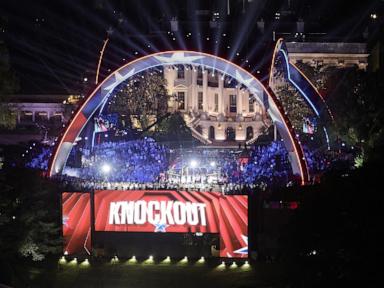
Seven people now face federal charges for a terrifyingly specific plan to turn a high-profile sports spectacle into a mass casualty event. The target was UFC Freedom 250, a unique outdoor mixed martial arts event held right outside the White House on June 14, 2026. While the headline looks like typical modern madness, the actual details tucked inside the federal complaints reveal an incredibly dangerous shift in how domestic terror operates.
This was not a group of local extremists meeting in a physical basement. It was a decentralized, multi-state web of individuals coordinated entirely through social media apps and encrypted chats. They possessed a terrifying blueprint: use explosive-laden drones to trigger mass panic, herd fleeing attendees toward designated exits, and have snipers waiting on rooftops to gun down high-value political targets.
The plot failed, but only because an observant family member spoke up before it was too late. Understanding how this operation came together reveals a massive blind spot in national security, public event planning, and digital monitoring.
The Drone to Sniper Tactic Explodated
Most traditional security protocols look for truck bombs or active shooters at gates. The plotters targeting the White House UFC event looked above those gates. According to FBI affidavits, the conspiracy began taking shape around March 2026 on TikTok before moving to the encrypted messaging app Signal.
The tactical plan was divided into two distinct, lethal phases. First, the group intended to stage a distraction or demonstration on the north side of the White House to draw attention. Simultaneously, they planned to launch small, amateur-built drones rigged with explosives over the arena. The goal of these drones was not just to cause immediate damage, but to create absolute chaos. The plotters knew the explosions would force the Secret Service and local police to rapidly evacuate high-value targets, including President Donald Trump and multiple U.S. Senators in attendance.
That is where the second phase came in. The group mapped out the surrounding Washington, D.C. streets, identifying specific exit bottlenecks. They planned to position marksmen with high-powered rifles to wait for fleeing politicians and attendees to emerge into the open. It was a classic military ambush structure adapted for a civilian sports crowd.
Federal agents executing search warrants recovered an alarming amount of tactical gear. The list included high-powered rifles, thousands of rounds of ammunition, tactical belts, night vision goggles, and infrared laser target pointers. Crucially, investigators also found 3D printers and specialized filament used specifically to manufacture drone components designed to carry payloads.
Inside the Seven Man Network and Their Tier System
The Department of Justice arrested five individuals initially, followed quickly by two more key players. The seven defendants hail from five different states: Ohio, California, Missouri, Nebraska, and Washington. They did not grow up together. They did not even meet in person until they began organizing parts of this operation.
To keep things organized, the group utilized a rigid organizational structure. One of the suspects, Michael Alan Thomas, described a four-part system in their encrypted chats to separate roles based on commitment and capability.
- Tier 1 (The Ground Operators): These were the frontline shooters and snipers who were explicitly willing to put themselves in harm's way.
- Tier 2 (The Drivers and Pilots): This group consisted of the getaway drivers and the technical individuals responsible for building, configuring, and flying the explosive drones.
- Tier 3 (Logistics and Supply): These members handled the procurement of weapons, ammunition, 3D printing equipment, and tactical gear.
- Tier 4 (Influencers and Funders): This layer focused on funding the operation and using social media platforms to spread their underlying anti-government ideology.
The alleged ringleader was 31-year-old Abraham Hermosillo Alvarez of Omaha, Nebraska, who went by the digital handle "Shepherd." FBI tracking showed Alvarez designed the tier system and pushed the group toward violent action, explicitly messaging others to make the drones "as many and as deadly as we can get."
The other six defendants filled out the operational grid. Tycen Proper, a 19-year-old from Ohio, amassed thousands of rounds of ammunition at his home and focused heavily on targeting specific politicians, including Arkansas Senator Tom Cotton and Tennessee Senator Marsha Blackburn. Bryan Omar Roa, 24, and Michael Alan Thomas, 32, both from California, conducted marksmen training in Southern California and prepared for what Thomas called "gorilla style warfare."
Daniel K. Eskridge, 32, of Missouri, served as a recruiter and organizer, while 28-year-old Jordan Rincker, also of Missouri, handled financial logistics. Rincker allegedly accepted $1,200 from Alvarez to distribute to other members via CashApp, including sending money to Roa for gas to drive across the country. The final piece of the puzzle was William Lee Spartacus Falkner, arrested in Washington, who possessed deep technical expertise in drone manufacturing and flight configurations for maximum destruction.
How an Alarmed Mother Cracked the Code
With all the millions of dollars spent on electronic surveillance, artificial intelligence tracking, and federal counter-terrorism units, this entire plot was brought down by a single mom.
On June 10, four days before the scheduled UFC event, the mother of 19-year-old Tycen Proper contacted local law enforcement in Ohio. She was deeply alarmed by her son's rapid radicalization and recent behavior. He was buying up weapons, hoarding tactical gear, and spending hours talking online to people who claimed to have military backgrounds. She told local officers she had overheard conversations about physical fitness regimes, surveillance, and what sounded like "hit and run missions."
Local police immediately looped in the FBI. When federal agents interviewed Proper at a medical facility on June 11, the teen cracked. He laid out the entire plan, detailed the Fredericksburg, Virginia rendezvous point, and gave investigators the keys to their encrypted Signal chat logs.
That single intervention triggered a mad scramble across four states. Federal agents moved in on the co-conspirators over the weekend, executing search warrants and making arrests just as some of the members were physically traveling toward Washington, D.C. If that mother had hesitated for even 48 hours, the tactical team would have already been in place around Pennsylvania Avenue.
The Modern Anatomy of Online Radicalization
This case blows up the old stereotype of how domestic terror cells form. The group started in an open TikTok channel called "Vanguard of the Old." The channel originally served as a place for users to vent about the direction of the country, swap conspiracy theories, and complain about the government.
Investigators found that the group shared a loose mix of anti-government beliefs, anti-Semitic views, and specific grievances regarding how federal authorities handled files related to convicted sex offender Jeffrey Epstein. They targeted certain lawmakers simply because they believed those politicians accepted money from pro-Israel political action committees.
The progression from venting on a public video app to plotting murder on an encrypted app is terrifyingly brief. As users showed more extreme views in the public comments, they were pulled into private TikTok groups, vetted, and then moved onto Signal. This pipeline separates the casual internet ranter from the active militant. Some members told the FBI after their arrests that they thought they were just "advisers" or "observers," showing how easily people blur the line between digital fantasy and real-world criminal conspiracy.
Threat Assessment and Drone Security Vulnerabilities
The White House UFC plot highlights a glaring vulnerability in physical security infrastructure. Consumer drones are cheap, easily modifiable, and incredibly difficult to detect in a crowded urban environment until they are already overhead.
The Secret Service utilizes sophisticated counter-drone technology, including signal jammers and electronic geofencing. However, the plotters planned to circumvent this by using custom, 3D-printed drones that could operate on non-standard radio frequencies or follow pre-programmed GPS coordinates without relying on a live, jammable controller signal. By pairing an aerial attack with ground snipers, the conspirators created a multi-layered threat designed to overwhelm immediate emergency response tactics.
National security agencies are forced to re-evaluate how they secure large public gatherings in major cities. When a sports event is dropped into an open space like the White House lawn or a public park, the surrounding high-rise buildings and open air corridors present an almost impossible security perimeter to lock down fully without massive disruptions.
Actionable Next Steps for Personal and Event Safety
Large scale public gatherings require a shift in personal awareness. You don't need to live in fear, but you do need to understand how the threat environment has changed.
- Look for the Perimeter Flaws: When attending an outdoor stadium, festival, or political rally, take note of the choke points. The White House plot relied entirely on herding people through limited exit gates. Identify alternative egress routes that move away from the main crowd flow.
- Take Drone Sightings Seriously: If you spot a drone hovering directly over a dense crowd at a restricted public event, report it to event security or law enforcement immediately. Commercial operators face strict regulations against flying over open crowds without explicit permits.
- Report Swift Radicalization: The biggest takeaway from this case is that early intervention works. If a family member or friend exhibits a sudden obsession with acquiring tactical gear, discusses "missions," or joins insular online groups focused on tearing down the system, reaching out to local law enforcement or mental health professionals can save lives.
The federal court system will now process these seven individuals across multiple jurisdictions outside Washington, D.C., where the bulk of the planning occurred. They face charges ranging from conspiracy to commit violence on White House grounds to conspiracy to commit murder, the latter of which carries a maximum penalty of life in prison. The system worked this time, but the blueprint they left behind ensures that security details will never look at an open-air event the same way again.
For a deeper look into how federal agents tracked down the suspects and intercepted the plotters just days before the event, check out this comprehensive broadcast covering the FBI White House UFC Plot Arrests. This video details the multi-state law enforcement operation that unfolded over the weekend to prevent the attack.