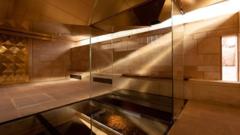
Drop a heavy reusable stainless steel water bottle on your kitchen floor, and you might get a tiny dent. Drop it onto the protective viewing platform inside Leicester's premier historical exhibit, and you trigger a multi-year logistics operation costing nearly thirty thousand pounds.
That is exactly what happened at the King Richard III Visitor Centre. A tourist accidentally dropped a bottle, cracking the specialized viewing glass directly above the spot where the last Plantagenet king lay lost to history for centuries.
Now, workers are finally moving in to fix the mess. The repair bill sits at a staggering £29,830. It shows just how fragile our connection to ancient history really is, and how easily a single second of clumsiness can disrupt global heritage tourism.
The Price of a Careless Drop
The accident itself didn't happen yesterday. The glass pane was cracked back in 2024. For a long time, visitors kept looking through the damaged panel down into the earth where archaeologists famously dug up the king’s bones under a mundane city council parking lot.
Fixing a regular window takes an afternoon and a couple hundred quid. Fixing a floor that seals a scheduled ancient monument is an entirely different beast. A specialist team of contractors is taking over the site to pull up the ruined layer and install a brand-new, ultra-tough triple-glazed panel.
Taxpayers can breathe a small sigh of relief. An insurance claim covers the vast majority of that £29,830 bill. But money isn't the only cost here. The grave site section must completely shut down for three days while the crews do their work. If you plan to visit the city to see the historic spot between Wednesday, July 8 and Friday, July 10, 2026, you will find yourself locked out of the main event. The grave site reopens fully on Saturday, July 11.
Why You Can't Just Hire a Local Glazier
You might wonder why a thick piece of glass costs as much as a brand-new car. The answer lies in what is happening beneath the surface of that floor.
When researchers found Richard III in 2012, they didn't just pull the skeleton out and throw dirt back in the hole. The original earth of the Greyfriars Priory choir remains exposed to view. It is a fragile archaeological environment. If the air mix changes too much, or if moisture gets trapped underneath, ancient soil structures crumble. Mold can grow. The entire historical context could vanish.
The glass panel does far more than stop people from falling into a pit. It acts as a specialized climate barrier. The new triple-glazed setup must meet insane tolerances:
- It has to hold the weight of hundreds of walking tourists every single day.
- It must offer absolute optical clarity so people can see the exact contours of the grave trench.
- It has to block harmful UV rays that degrade organic material.
- The sealing mechanism must prevent any moisture transfer between the busy museum room and the silent grave dirt below.
When the contractors lift that broken glass, they aren't just replacing a floor. They are performing delicate surgery on a historical vacuum seal. One slip of a crowbar could destroy five-hundred-year-old priory foundations.
The Long Journey from Parking Lot to Protective Glass
To understand why Leicester treats this patch of dirt with such extreme caution, you have to look at how we got here. For centuries, the final resting place of Richard III was a punchline. He died at the Battle of Bosworth Field in 1485. His body was brought back to the city, thrown into a hastily dug grave at Greyfriars, and largely forgotten after Henry VIII tore down the monasteries.
By the twentieth century, the site was covered in tarmac. Social workers parked their sedans right on top of a monarch.
The 2012 excavation changed everything. It was a triumph of historical intuition and DNA matching. When the visitor centre opened its doors in 2014, the glass floor became the emotional core of the entire experience. It allowed people to stand precisely where the king's body had been crammed into the earth without dignity.
That emotional connection requires physical closeness. But closeness breeds danger.
The Growing Battle Between Tourism and Preservation
Museums across the globe face this exact nightmare every day. We want history to be accessible. We don't want artifacts locked away in dark vaults where nobody can see them. We want people to stand close enough to feel the weight of time.
But humans are clumsy. We carry backpacks that scratch ancient plaster. We carry metal water flasks that slip out of sweaty hands.
Assistant city mayor Councillor Vi Dempster notes that these upcoming works ensure the site stays protected to the highest standards. It is a polite way of saying that museum curators have to constantly upgrade defenses against their own paying guests.
The rest of the visitor centre stays open normally during the three-day repair window. You can still see the story of the bones, the facial reconstruction, and the deep dive into the DNA science. But the missing grave room reminds us that history is not a movie set. It is real, it is fragile, and once it breaks, it takes years and tens of thousands of pounds to patch back together.
What to Do If You Are Visiting Leicester This Week
If you are traveling to the city for the history, do not despair. While the grave site itself is closed until Saturday, July 11, you can easily pivot your itinerary to capture the full story of the king.
First, go around the corner to Leicester Cathedral. That is where Richard's bones actually rest now, sealed inside a massive tomb of Swaledale fossil stone. The cathedral is unaffected by the visitor centre glass repairs.
Second, spend time in the remaining wings of the visitor centre. The exhibition guides you through the entire detective story of the hunt for the king, which is arguably more fascinating than staring at the empty dirt trench anyway.
Most importantly, when the grave room finally reopens this weekend, leave your heavy metal water bottles in your bag. The history you are standing on survived centuries of war and neglect. It shouldn't get taken out by a dropped flask.