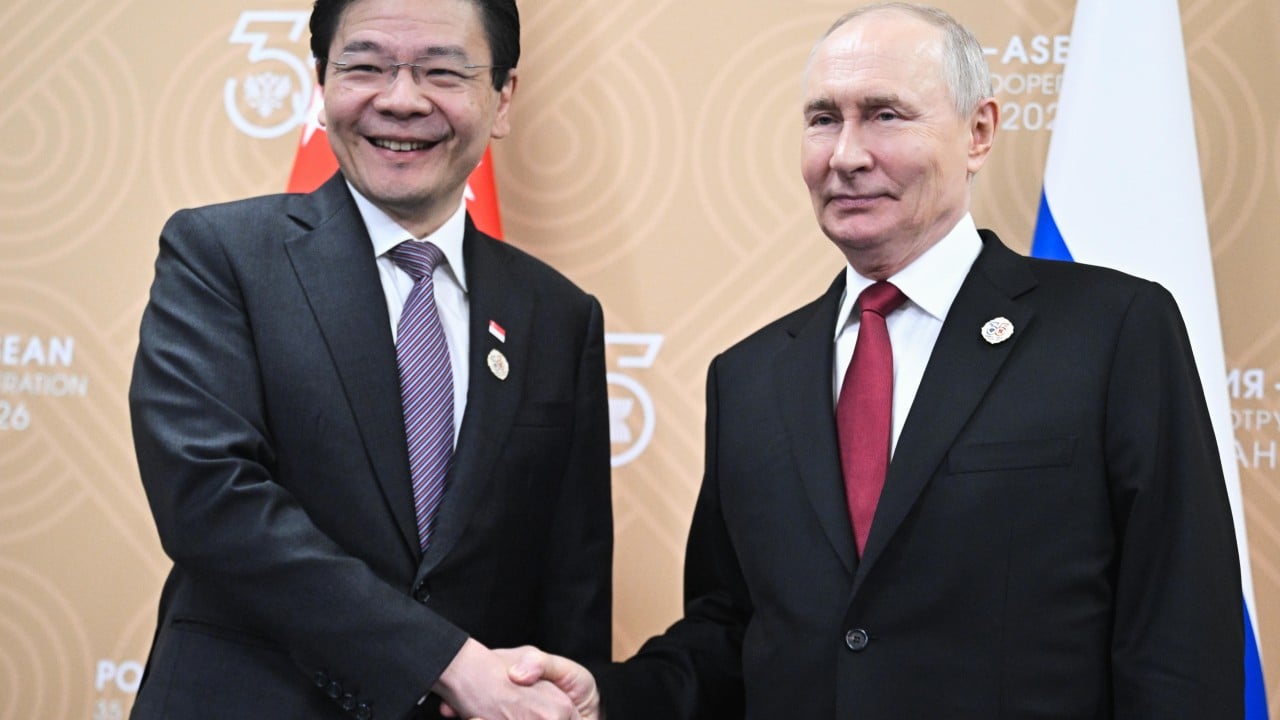
When images hit the wire showing Singapore’s Prime Minister Lawrence Wong shaking hands with Vladimir Putin in Kazan, a collective gasp went through the foreign policy community.
Here was the leader of the only Southeast Asian nation to slap bilateral sanctions on Moscow after the 2022 invasion of Ukraine, sitting down for a chat on Russian soil. Critics immediately started whispering about whether the tiny city-state was finally softening its stance.
It isn't. Not even a little bit.
If you think this handshake signals a shift in Singapore's foreign policy, you don't understand how the country survives. The meeting at the ASEAN-Russia Commemorative Summit in June 2026 wasn’t a white flag. It was a masterclass in calculated neutrality and regional obligation.
The ASEAN Obligation is a Package Deal
Let’s clear up the biggest misconception right out of the gate. Lawrence Wong didn't fly to Russia on a cozy bilateral vacation. He went because Singapore is a core member of the Association of Southeast Asian Nations (ASEAN).
The Kazan summit marked the 35th anniversary of ASEAN-Russia relations. In Southeast Asian diplomacy, showing up is non-negotiable. If Singapore skipped the event to make a point, it would undermine what diplomats call "ASEAN Centrality"—the idea that the regional bloc must remain the main driver of its own geopolitical destiny, engaging all major powers regardless of friction.
During the summit, Wong explicitly highlighted that Singapore welcomes Russia’s support for this central role. Standing next to Putin, he spoke about finding practical areas for cooperation under the ASEAN-Russia Comprehensive Plan of Action (2026-2030), covering baseline issues like disaster management and countering drug trafficking.
Singapore takes over the rotational ASEAN chairmanship soon. Showing up now guarantees it can steer the regional ship later.
Talking to Everyone is a Survival Strategy
Singapore’s founding father, Lee Kuan Yew, established a core rule that the island nation still lives by: be a friend to all and an enemy to none. But that doesn’t mean being a pushover.
I've watched small-state diplomacy for years, and the most common mistake outsiders make is confusing dialogue with endorsement. Singapore keeps its embassy open in Moscow. The Russian embassy still operates on Nassim Road in Singapore. Why? Because cutting off communication channels is a luxury only giant, self-sufficient empires can afford.
Even at the height of the Cold War, Washington and Moscow kept a direct line open. For a tiny red dot on the map, shutting down dialogue creates massive blind spots. Wong used his social media to drive this exact point home, noting that the discussion "underscored the value of dialogue and engagement, even when countries do not see eye to eye."
The Sanctions Remain Deeply Engrained
Don't let the polite diplomatic smiles fool you into thinking the 2022 sanctions are going away. Singapore’s Ministry of Foreign Affairs built those measures to be targeted, and they remain ironclad.
The restrictions explicitly block:
- Export controls on items that can be used directly as weapons in Ukraine.
- Financial measures targeting specific Russian banks and entities.
- Cybersecurity and technological transfers linked to the war effort.
These measures weren't designed to destroy the Russian economy or permanently sever civilian, cultural, or educational ties. They were a targeted strike against a violation of international law.
When Wong stood up in Kazan, he didn’t mince words. He stated plainly that Singapore took its tough position on Ukraine not out of alignment with any global superpower bloc, but because of a "consistent commitment to the principles of sovereignty and territorial integrity."
For a country roughly the size of Lake Tahoe, the absolute sanctity of borders is a life-or-death issue. If big countries can simply swallow small neighbors because of historical grievances, Singapore has no future. That's why the government drew a hard line in 2022, and it’s why that line isn't moving now.
Pragmatism Over Pure Ideology
While the West often views international relations through a moral lens of good versus evil, Southeast Asia operates on cold, hard pragmatism.
Take Wong’s sideline meeting with Rustam Minnikhanov, the leader of Tatarstan. Singapore and the Russian republic have a relationship dating back to 2007. They talked about cultural and educational ties. To a Western observer, this looks like normalizing relations with a nation under global scrutiny. To a Singaporean diplomat, it’s keeping a low-risk economic and cultural relationship warm while avoiding the radioactive military sphere.
Nations in this region don't want to get dragged into a new Cold War dynamic where they have to choose a side. They look at a volatile global environment—with trade wars and shifting US policies—and realize they need a diversified portfolio of relationships.
Your Next Steps for Tracking This Geopolitical Balance
If you want to understand how this plays out over the next twelve months without getting distracted by superficial media headlines, focus on these concrete indicators:
First, watch the implementation of the ASEAN-Russia Comprehensive Plan of Action. See if Singapore limits its participation strictly to non-military, low-level technical work like disaster relief, which keeps them compliant with their own sanctions.
Second, monitor Singapore’s upcoming ASEAN Chairmanship. Look at how the government handles Russia's presence at the East Asia Summit. A truly softening stance would mean softening language in joint statements, which is highly unlikely given Singapore's past track record.
Third, track the enforcement of export controls by Singaporean customs authorities. If the trade data shows zero leakage of dual-use technology to Russian buyers, you know the policy remains as strict as ever.
The brief meeting in Kazan wasn't a sudden policy shift. It was just another day of a small country doing exactly what it takes to survive in an increasingly dangerous world.
To see the direct statements and tone of the summit for yourself, watch the official bilateral exchange between Prime Minister Lawrence Wong and Vladimir Putin, which illustrates the highly formal, pragmatic nature of the interaction without any signs of a deeper diplomatic shift.