The ground in northern Venezuela didn't just shake on June 24. It split open, swallowing entire blocks and shattering a fragile nation already teetering on the edge. If you think you understand the scale of this disaster from a quick glance at the news, you don't.
Official numbers don't capture the smell of ruptured sewer lines mixing with tropical heat. They don't capture the sound of thousands of people screaming into the dark for relatives buried under tons of concrete.
The latest data from the United Nations and local officials paints a terrifying picture. The death toll jumped to 1,943 people. Over 10,571 are injured. Worse yet, more than 50,000 people remain missing or completely isolated in the coastal mountain ranges and precarious barrios surrounding Caracas.
This isn't a standard natural disaster. It's an active humanitarian catastrophe that's rapidly spinning out of control.
The Dual Shock That Broke a Nation
Most major earthquakes involve a single violent shock followed by smaller aftershocks. Venezuela got hit by a rare and devastating geological double-punch.
Two massive earthquakes struck within 40 seconds of each other. The first registered a magnitude 7.2. Before anyone could react, a massive 7.5 magnitude mainshock tore through the central-northern region.
The United States Geological Survey tracked the epicenters near Yumare, but the devastation radiated directly into the country's most densely populated urban centers.
NASA researchers analyzing satellite imagery estimate that 58,870 buildings are completely destroyed or heavily damaged. Think about that number for a second. That's not just broken windows. We're talking about collapsed apartment complexes, flattened schools, and pulverized hospitals.
The states of La Guaira, Caracas, Miranda, Carabobo, and Yaracuy took the brunt of the force. La Guaira looks like a war zone. Entire neighborhoods in Catia La Mar, built on steep hillsides with weak foundations, simply slid into oblivion.
Why the Missing Count is a Logistical Nightmare
The figure of 50,000 missing isn't just a placeholder statistic. It represents a massive blind spot that rescue teams are struggling to navigate.
Communication infrastructure across northern Venezuela collapsed immediately after the twin shocks. Cell towers are down. Internet connectivity plummeted to near zero. Power grids are fried.
When a hillside neighborhood collapses in an area like La Guaira, you can't just call the residents to see if they're okay. Landslides triggered by the shaking blocked the narrow mountain roads. Emergency vehicles can't get through.
Rescue workers are forced to clear debris by hand or with rudimentary tools. Heavy machinery can't reach the hardest-hit zones. Every hour that passes reduces the chance of finding survivors under the rubble. The critical 72-hour window closed days ago, meaning the death toll will inevitably surge past the current official count.
The Brutal Truth About the Aid Bottleneck
People are starving in the streets right now. The United Nations issued an urgent warning stating that survivors face a cruel lack of food, clean drinking water, and basic shelter.
The problem isn't a lack of international willingness to help. The problem is a broken distribution system.
The Venezuelan government insisted on a rigidly centralized military scheme for distributing aid. Everything must go through state-controlled hubs before it reaches the victims. This decision created a massive bureaucratic bottleneck.
Organized communities, local parish assemblies, and non-governmental organizations on the ground are furious. They report that life-saving medical supplies and food crates are sitting in warehouses while bureaucratic red tape gets sorted out.
When you're sleeping on a plastic tarp in the rain next to the ruins of your home, you don't care about official stamps or military protocol. You need clean water. You need a meal.
Independent relief workers say the government's insistence on total control is turning a logistical challenge into a death sentence for vulnerable families trapped in remote areas.
A Looming Health Crisis in the Rubble
Getting people out of the rubble is only step one. Step two is keeping the survivors alive, and the odds are currently stacked against them.
The state of La Guaira and the peripheral slums of Caracas are facing an immediate threat of epidemics. Water mains burst during the quakes, flooding the streets with raw sewage. The tropical June heat accelerates the decomposition of organic matter trapped beneath the debris.
People have no choice but to use contaminated water sources for washing and, in desperate cases, drinking. Public health experts warn that outbreaks of cholera, typhoid, and severe diarrheal diseases are imminent.
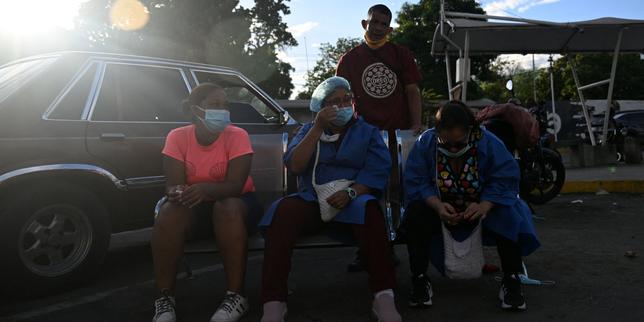
Hospitals that survived the shaking are completely overwhelmed. They lack basic antibiotics, sterile bandages, and clean water. Doctors are performing surgeries by flashlight in makeshift tents while the floor shakes from continuous aftershocks.
The Venezuelan Seismological Institute, FUNVISIS, registered more than 430 aftershocks since the initial June 24 disaster. Every single tremor threatens to bring down partially damaged structures, creating fresh casualties and terrorizing a population that hasn't slept in a week.
How the International Community is Reacting
International rescue teams are arriving, but they face immense hurdles. Search-and-rescue units from Mexico and US teams from Fairfax County and Los Angeles County deployed to the region.
The UN Population Fund allocated $500,000 from emergency funds to address immediate protection and maternal health needs. Pregnant women and young children are sleeping in overcrowded public squares with zero security.
Maiquetía International Airport suffered structural damage, disabling key runways and complicating the arrival of heavy cargo planes filled with emergency supplies. Most international aid has to be funneled through secondary ports or driven across treacherous terrain from undamaged sectors.
The Next Critical Steps for Survival
This crisis requires immediate action to prevent the death toll from doubling due to disease and starvation. The international community and local coordinators must prioritize three specific steps.
First, bypass bureaucratic hurdles. International donors must insist on direct delivery pipelines to trusted local NGOs and religious networks already embedded in the affected communities. Centralized military storage units are proving too slow.
Second, prioritize mobile water purification units. Dropping off cases of bottled water is a temporary fix. The focus must shift to distributing portable water filtration systems and chemical purification tablets to households in La Guaira and Caracas to halt the spread of waterborne diseases.
Third, establish secure temporary camps outside the landslide zones. Keeping thousands of displaced people in makeshift shanties on unstable hillsides is an invitation for further tragedy. The rainy season will only worsen the soil instability.
If you want to help, focus your support on organizations with established networks inside Venezuela that can maneuver around the political gridlock. Don't let this disaster fade into the background of the global news cycle.
The emergency didn't end when the shaking stopped. For millions of Venezuelans, the real fight for survival started the moment the dust settled.